China has become a major sourcing base for compact charging accessories, including the Two Pin Magnetic Charger. Its advantages are visible in daily production details. Suppliers can offer customized cable lengths, molded connectors, private labeling, and flexible order quantities. However, factory size alone does not prove dependable performance.
This guide examines two leading China-based suppliers through practical purchasing criteria. The review considers manufacturing experience, magnetic connection strength, charging stability, connector materials, cable durability, and quality-control procedures. It also looks at sample response time, production capacity, packaging options, and communication during technical changes. A reliable supplier should provide clear specifications, test reports, and traceable production information. Certifications should be verified for the target market, product model, and intended application. Do not rely on a logo alone.
Small details matter. A clean contact surface can reduce charging interruptions. A reinforced cable joint may prevent early bending damage. Consistent magnet alignment can improve user experience during repeated connection cycles. Supplier websites often present polished claims, but factory samples reveal more. Testing several samples is wiser than trusting one attractive prototype.
The “top two” selection should therefore remain practical, not absolute. Prices, technology, capacity, and service may change over time. I may also overlook suppliers with strong regional advantages. That limitation deserves attention. Readers should compare current quotations, production evidence, warranty terms, and independent test results before choosing a partner. The right supplier is not always the cheapest. It is the one that delivers stable quality, honest communication, and repeatable performance.
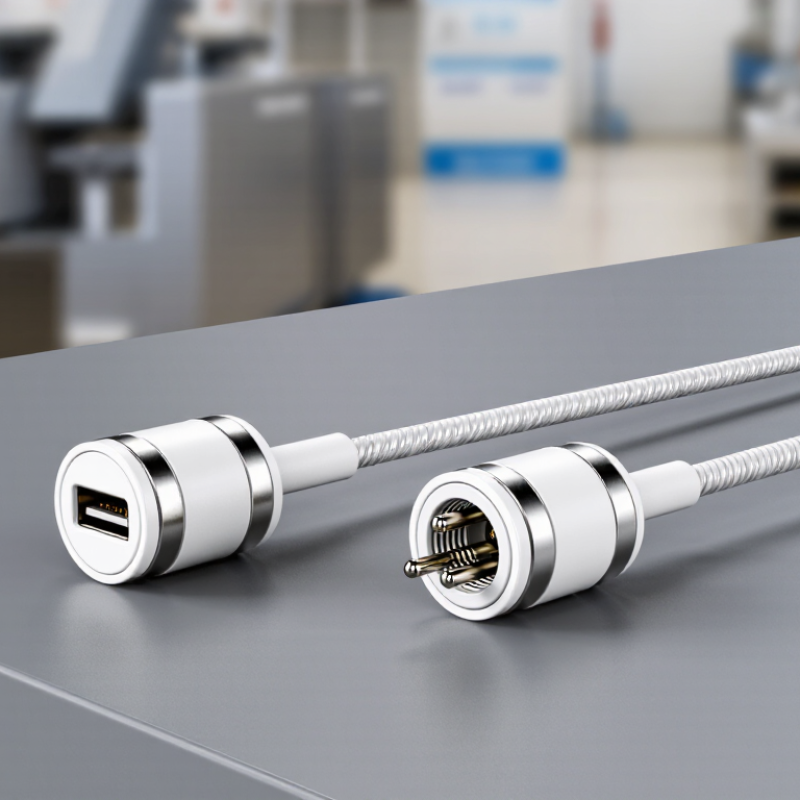
Two-pin magnetic chargers use two metal contacts to transfer low-voltage direct current. One pin carries positive power, while the other provides the return path. Magnets guide alignment, but they usually do not carry the electrical load. Spring-loaded pogo pins press against matching pads, creating a detachable connection for compact devices, wearables, and small electronics. Simple in appearance.
That simplicity can mislead. Buyers comparing Chinese suppliers should check pin travel, contact resistance, magnet strength, polarity protection, and cable bending tests. A loose pin may cause intermittent charging or local heating. Grand View Research valued the global wireless charging market at about USD 25.9 billion in 2022 and projected a 13.2% CAGR from 2023 to 2030. However, this figure includes several charging technologies, not only two-pin designs. That distinction matters. MarketsandMarkets also identifies rising demand for compact consumer electronics as a major charging-market driver. Supplier audits should therefore include sample testing, material traceability, production inspection, and documented electrical safety procedures. A polished sample is not enough. In practical testing, dust, sweat, repeated attachment, and sideways cable pressure can expose weaknesses. I would also question unusually high current claims unless thermal data and cycle results support them. Two pins reduce connector complexity, yet they leave little room for error.
| Evaluation Dimension | Supplier Profile 1 Standard Two-Pin Cable |
Supplier Profile 2 Two-Pin Magnetic Dock |
|---|---|---|
| Product Type | Magnetic charging cable with a detachable two-contact connector | Magnetic charging cradle or desktop charging base with two contacts |
| Number of Electrical Contacts | Two contacts, normally used for positive and negative DC power | Two contacts, normally used for positive and negative DC power |
| Typical Input Interface | USB-A or USB-C plug, depending on the cable design | USB-C, USB-A, or a fixed DC input, depending on the dock design |
| Common Power Input | Usually 5 V DC from a USB power source | Usually 5 V DC; the exact requirement is determined by the target device |
| Charging Function | Transfers low-voltage DC power through the magnetic interface | Transfers low-voltage DC power while positioning the device on a fixed base |
| Data Transmission | Normally unavailable unless additional contacts and circuitry are provided | Normally unavailable on a basic two-contact charging dock |
| Magnetic Connection | Magnetic attraction helps align and hold the detachable connector | Magnetic attraction helps position the device on the charging cradle |
| Reversibility | May be reversible if the contact layout and mechanical design support either orientation | May be orientation-specific when the cradle uses a shaped housing or guide rails |
| Contact Material | Commonly spring contacts or conductive pads with a corrosion-resistant plated surface | Commonly spring contacts or conductive pads with a corrosion-resistant plated surface |
| Mechanical Protection | The magnetic separation can reduce cable-side strain when the cable is pulled | The fixed base can provide better placement stability during charging |
| Typical Applications | Small rechargeable devices, compact electronics, wearable products, and sealed enclosures | Wearable devices, handheld equipment, rechargeable accessories, and desktop charging stations |
| Key Customization Options | Cable length, connector diameter, magnet strength, contact spacing, housing material, and plug type | Base dimensions, device alignment, contact spacing, magnet arrangement, cable routing, and enclosure finish |
| Important Compatibility Check | Verify contact polarity, spacing, voltage, current requirement, connector dimensions, and mating orientation | Verify device geometry, contact position, polarity, voltage, current requirement, and charging-control requirements |
| Main Limitation | Two contacts generally support power only and do not provide a dedicated communication connection | A fixed two-pin layout is usually designed for a specific device and may not be interchangeable with other products |
Note: Two-pin magnetic chargers are typically low-voltage DC power accessories. Actual voltage, current, polarity, contact spacing, ingress protection, and safety performance must be confirmed from the product specification and tested with the target device before use.
It uses two electrical contacts and a magnetic head for guided connection. The magnet helps align the charger quickly. It should not force the socket. Simple design.
Ask for contact materials, rated current, voltage tolerance, and operating temperature. Also request cable construction details and connector housing materials. Written specifications reduce confusion.
No. Gold plating can resist oxidation during repeated use. Spring-loaded pins may maintain contact during small movements. Cable quality, soldering, insulation, and housing strength also matter.
Test charging stability, contact resistance, heat, and output under different cable angles. Repeat the connection hundreds of times. Measure pull force and inspect pin alignment afterward.
Not automatically. A sealed structure may resist dust and splashes. Buyers should request a specific protection rating and test scope. Assumptions can cause expensive mistakes.
Metal dust may collect around exposed contacts. Movement can disconnect the charger accidentally. Cleaning access and cable routing deserve attention. Convenience has limits.
Check factory ownership, production capacity, traceable materials, and recent samples. Request inspection records and independent test reports. Verify the laboratory and testing scope.
Confirm cable length, connector angle, magnet strength, tolerances, order quantity, and lead time. Clarify tooling ownership and replacement policies in writing. A pilot batch is safer.
Materials or operators may change between batches. Later products can vary from successful samples. Recheck quality after every batch. No evaluation is perfect.
A Two Pin Magnetic Charger is a compact charging solution that uses two electrical contacts and magnetic alignment to connect a device with minimal effort. Its main advantages include quick attachment, convenient detachment, reduced mechanical wear, and a cleaner product appearance. These systems can be designed for different voltage, current, cable, housing, and connector requirements, making them suitable for various electronic devices and charging environments.
When evaluating Chinese suppliers, buyers should consider manufacturing capability, material quality, contact durability, magnetic strength, electrical safety, customization support, testing procedures, production consistency, and delivery reliability. Leading suppliers are generally distinguished by stable quality control, clear technical communication, sample development, and compliance with applicable international standards. Two Pin Magnetic Chargers may be used in personal electronics, smart equipment, portable instruments, lighting products, and other low-voltage applications. Careful assessment of supplier documentation, inspection records, product testing, and after-sales service can help buyers select a dependable manufacturing partner.

 Rongqiangbin