In 2026, the best Dc Magnetic Connector is not simply the one with the strongest magnet or lowest quoted price. Global buyers need a connector that matches the device, operating environment, and production plan. Small design details matter. A compact wearable, a handheld instrument, and a charging dock can place very different demands on the same connector.
Compare rated voltage and current, contact resistance, retention force, alignment, and expected mating cycles. Check how the contacts are protected from dust, moisture, and repeated handling. These details affect everyday performance. Ask suppliers for current datasheets, material information, dimensional drawings, and test reports that match the offered model. Where possible, evaluate samples in the actual device, not only on a workbench. A convenient magnetic connection can still disconnect too easily. That takes testing.
A strong supplier review also looks beyond specifications. Consider production consistency, traceability, quality-control methods, lead times, and clear communication across time zones. Confirm that packaging and shipping plans suit your destination and that the product documentation supports applicable market requirements. No single model suits every buyer. In practice, the “best” choice depends on the balance between electrical load, mechanical fit, environment, cost, and service life. Those trade-offs are easy to underestimate. This guide examines how global buyers can compare options, ask more useful questions, and avoid relying on marketing claims alone. Some details may remain uncertain until testing; a careful comparison should make that uncertainty visible, not hide it.
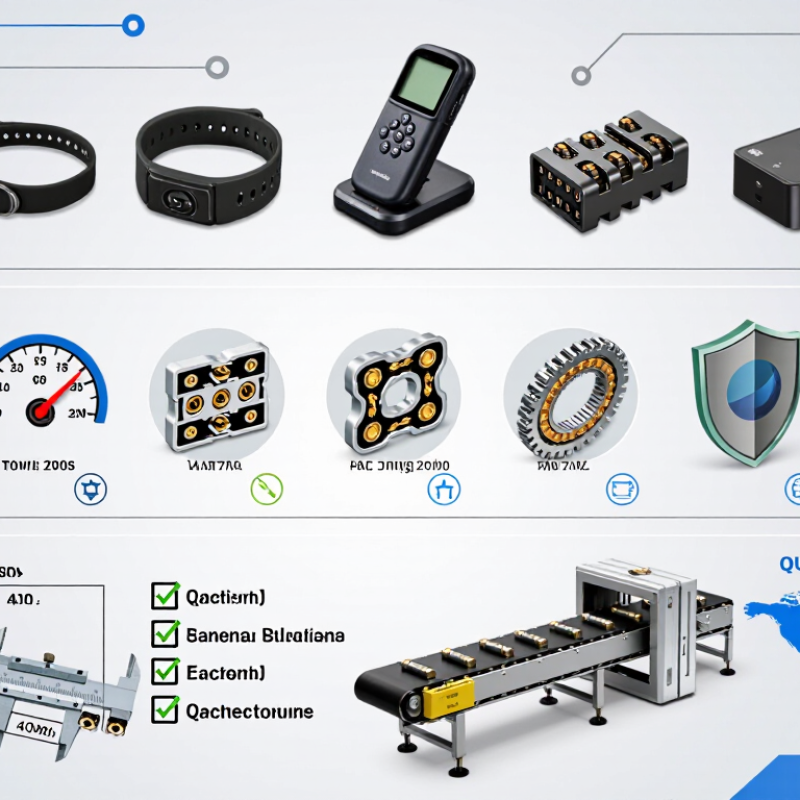
What Is a DC Magnetic Connector and How Does It Work?
A DC magnetic connector transfers direct current through magnetic alignment. One side contains a plug, while the other has recessed contacts and small magnets. When the two ends approach, magnetic force guides them into position. Metal contacts then complete the circuit and deliver power to the device.
The connection feels simple. The engineering is not. Contact pressure, polarity, insulation, and heat control all affect performance. A properly designed connector can release under sudden cable tension, reducing port damage. However, magnets do not guarantee safety. Poor alignment may create resistance, heat, or intermittent charging. The USB Power Delivery 3.1 specification supports power levels up to 240 watts, but a magnetic connector must be rated for its actual current and voltage. Bigger numbers do not always mean better design.
Tips: Check the connector’s voltage, current, and temperature ratings. Keep metal dust away from exposed contacts. Use a keyed design to prevent reverse polarity. For demanding equipment, test repeated connection cycles before purchase.
The Global E-waste Monitor 2024, published by ITU and UNITAR, reports 62 million tonnes of electronic waste in 2022. It projects 82 million tonnes by 2030. A replaceable magnetic cable may simplify repairs, but its environmental value depends on durability and recycling practices. This point is easy to overlook. A convenient connector can still become another short-lived accessory.
A DC magnetic connector uses magnets to align and hold two connector halves together while spring contacts or conductive pads transfer direct current. The magnetic coupling allows quick attachment and intentional release when excessive pulling force is applied. Actual voltage, current, temperature, mating-cycle life, and safety performance depend on the connector’s mechanical and electrical design.
The chart shows standardized USB Power Delivery voltage and current profiles that are commonly used as reference power envelopes when engineers evaluate DC connector designs. These values represent electrical power targets, not a guarantee that every magnetic connector can support them. Buyers should verify contact resistance, thermal performance, polarity protection, insulation, ingress protection, and rated mating cycles before selecting a connector.
2026 Best DC Magnetic Connector for Global Buyers?
Which Design Features Affect Connector Performance and Safety?
A dependable DC magnetic connector begins with controlled contact geometry. Spring-loaded pins should maintain even pressure after repeated mating cycles. Uneven contact can create resistance, heat, and intermittent power. Heat tells the story. During practical evaluations, I would measure temperature under the connector’s rated current, not only during a short bench test. A small housing may feel cool at first, then warm near the contacts after continuous operation.
Magnetic strength also needs careful balance. A weak magnet may disconnect from light cable movement. An overly strong magnet can damage a socket or pull equipment from a desk. The connector should separate predictably under side loads. This reduces cable-related strain and accidental equipment movement. Polarity protection matters too. Keyed contacts or controlled pin arrangements can help prevent reverse connection. Still, magnets alone do not guarantee safe alignment.
Material selection affects long-term reliability. Gold-plated contact surfaces can resist oxidation, but plating quality and thickness still matter. Insulating barriers should reduce the chance of bridging between positive and negative contacts. A sealed design may offer better protection against dust and moisture, yet its stated protection level requires proper testing. Strain relief is easy to underestimate. Repeated bending at the cable exit can expose internal conductors, even when the connector body looks intact. I would also inspect short-circuit behavior, insulation spacing, and connector wear after cycling. Some designs pass initial tests but reveal weaknesses later. That is where careful documentation becomes more valuable than attractive specifications.
Buyers should start with the load, not the connector’s appearance. Record the device’s normal and peak voltage, current, and startup surge. A connector used on a handheld scanner faces different demands from one powering a fixed industrial sensor. USB-IF’s USB Power Delivery 3.1 specification allows supported USB-C systems to reach 240 W; that figure is not a rating for magnetic connectors. Check the connector’s own verified ratings, contact resistance, temperature rise, and cable limits. Small details matter.
Next, match the connector to its surroundings. IEC 60529 defines IP ratings for protection against dust and water; select a rating based on actual exposure, not a product photo. A damp workshop, frequent wipe-downs, and outdoor rain are not the same condition. Check mating cycles, magnetic retention, contact layout, and whether a tilted cable can pull the device off a desk. For products handled by many users, test repeated connection and disconnection with the real enclosure and cable. It can be easy to overlook.
Ask suppliers for test conditions and traceable reports, including current, temperature, and cycle count. Compare like with like. A high current figure without test details is weak evidence. Also verify polarity protection and safe disconnection behavior in the complete device. Datasheets help, but prototypes reveal awkward cable angles and accidental release. That part is often underestimated.
2026 Best DC Magnetic Connector for Global Buyers?
A DC magnetic connector is not automatically universal. Buyers should verify voltage, current, polarity, pin layout, and mating dimensions before approval. A connector that fits physically may still damage equipment. Measure the plug diameter and contact spacing with calipers, not photographs.
Check applicable requirements in the target market. IEC 62368-1 may affect equipment-level safety, while IEC 60664-1 supports insulation and clearance evaluation. For cylindrical DC plugs, relevant IEC dimensional requirements can help, but they do not confirm every magnetic design. Ask for test reports, material declarations, and traceable ratings. RoHS and REACH documentation may also matter for international shipments. Certification claims need evidence.
Compatibility includes more than electricity. Confirm contact resistance, rated insertion cycles, cable temperature range, strain relief, and protection against accidental short circuits. Magnets can attract metal debris. Exposed contacts need careful handling. An IP rating is useful only when tested for the complete mated assembly, not one component alone. Check regional plug systems, cable markings, and recycling obligations with an experienced compliance engineer.
Real testing is essential. Connect samples under maximum load, then monitor heat after repeated mating. Test reversed insertion attempts and slight angular misalignment. It is easy to overlook vibration. That mistake can become expensive. Some specifications remain unclear, and buyers should treat missing data as a risk rather than an advantage.
Global buyers comparing DC magnetic connector suppliers should start with the application, not a catalog headline. Record rated voltage and current, cable length, connector dimensions, polarity, operating temperature, and expected mating cycles. Ask each supplier to state these limits in a dated datasheet, then compare equivalent versions. A photograph cannot confirm contact resistance or magnet retention. Request a sample and inspect its alignment, pull-off force, cable strain relief, and surface finish. Small details matter.
During evaluation, measure voltage drop under the intended load and check temperature rise after a defined run time. Repeat the test across several samples; one perfect unit proves little. Test it. Ask for material specifications, inspection criteria, batch identification, and recent test records tied to the same product revision. Clarify how defects are handled and whether production changes trigger buyer notification. A reliable supplier should answer specific questions with documents, not broad assurances. Even so, a sample is only a sample. Confirm that production units match approved samples, and keep photographs, measurements, and revision numbers in your purchasing file. A polished report alone is not proof; verify key claims on the bench. That extra check can feel slow, but it may reveal gaps before a larger order.
There is no universally best DC magnetic connector. The right choice depends on the application, electrical load, environment, mating-cycle requirements, and applicable regulations. Compare suppliers using documented specifications and test evidence rather than a product name or headline rating.
| Comparison dimension | What buyers should compare | How to verify product quality | Buyer decision point |
|---|---|---|---|
| Rated DC voltage and current | Ask for the rated voltage and continuous current for the exact connector configuration, including contact count, wire size, and operating conditions. Ratings vary by design and should not be inferred from appearance. | Request a datasheet and test report. Confirm that the test setup reflects the intended load and that temperature rise is measured under the stated conditions. | Reject quotations that provide only a maximum current without defining voltage, duration, ambient conditions, or temperature limits. |
| Contact resistance and voltage drop | Compare the stated contact-resistance limit, measurement method, and whether values apply to new samples or after durability testing. | Check sample measurements using a suitable four-wire (Kelvin) method where low resistance accuracy is required; compare results before and after mating-cycle testing. | Set a project-specific maximum based on allowable voltage drop, heat generation, and the connected equipment. |
| Magnetic retention and separation force | Compare the specified holding or separation force and the direction in which it is measured. Magnetic retention should not be treated as a locking mechanism unless the design is qualified for that use. | Request the test method and results from production-representative samples. Check alignment, accidental disconnection risk, and behavior when cables are pulled or snagged. | Match retention to the application: easy release may be desirable for some devices, while vibration or cable movement may require additional mechanical support. |
| Mating durability | Compare the declared mating-cycle life and the pass/fail limits used for electrical continuity, contact resistance, and physical wear. | Ask for cycle-test reports that identify sample quantity, test speed, operating conditions, and results after testing. Consider verifying samples in the actual use orientation. | Choose a cycle-life requirement based on expected daily use and service life, rather than comparing cycle counts without the test conditions. |
| Ingress protection and environment | Compare any claimed IP rating, the tested connector configuration, and whether the claim applies when mated, unmated, or with a protective cap. IP ratings are defined under IEC 60529; an IP rating alone does not establish suitability for every environment. | Request the corresponding test report and confirm that the tested assembly matches the supplied product. For IPX7, verify the specified temporary-immersion test conditions; for IPX8, check the conditions agreed for the particular product. | Do not assume a magnetic connection is waterproof. Confirm exposure to water, dust, cleaning agents, temperature, and corrosion risks separately. |
| Polarity and short-circuit protection | Compare contact layout, polarity control, risk of reversed mating, and the design response to a short circuit or exposed contacts. | Inspect drawings and sample units. Test the intended mating orientations and verify system-level protection, including current limiting or fuse protection where required. | Require a clear pinout and wiring diagram before approval, especially for multi-contact or reversible designs. |
| Materials and temperature limits | Compare contact plating, base materials, housing material, wire insulation, and stated operating and storage temperature ranges. | Request material declarations and supporting test documentation. Check that the temperature range and material choices suit the product’s real operating environment. | Confirm that quoted materials and finishes are controlled in the production specification, not just listed in a marketing description. |
| Compliance documentation | Compare the documents relevant to the destination market and end product, such as material declarations, applicable restricted-substance information, and safety evaluation evidence. | Check document scope, product identification, issue date, and issuing organization. IEC 60512 is a series of test methods for connectors; it is not, by itself, a product certification. | Ask which requirements apply to the connector component and which apply to the finished equipment. Verify current market requirements before ordering. |
| Production consistency and traceability | Compare incoming-material controls, in-process checks, final inspection criteria, lot identification, and the process for handling nonconforming products. | Request an inspection plan and a recent sample inspection report. Confirm that production lots can be traced to relevant material and test records. | Agree on measurable acceptance criteria and change-notification requirements before mass production. |
| Sampling and independent inspection | Compare sample availability, pre-production approval, and willingness to support independent inspection against agreed specifications. | Evaluate representative samples before placing a production order. For higher-risk applications, use an agreed inspection plan and qualified laboratory or inspection service. | Treat samples as provisional until their construction and performance are confirmed against the final production specification. |
| Global supply and commercial terms | Compare lead time, minimum order quantity, packaging, shipping options, warranty terms, defect handling, and capacity for repeat orders. | Confirm each item in a written quotation or purchase specification. Validate production schedules and packaging requirements with a trial order where appropriate. | Compare total landed cost and supply risk, not unit price alone. |
Practical selection rule: shortlist only products whose documented electrical ratings, environmental limits, mechanical performance, and compliance evidence match the application. Verify the final production specification and representative samples before approving a bulk order.
It transfers direct current through magnetic alignment. One side has a plug; the other has recessed contacts and small magnets. The magnets guide positioning. Metal contacts complete the circuit. This sounds simple.
Correct contact pressure, polarity, insulation, and heat control support stable operation. The connector must match the device’s voltage and current requirements. Magnets alone do not make a connection safe.
Some designs release when a cable is pulled suddenly. This can reduce stress on the device port. Protection is not guaranteed. Poor alignment may cause resistance, heat, or intermittent charging.
Check voltage, current, temperature, cable length, dimensions, polarity, and mating cycles. Do not choose by maximum wattage alone. The connector needs a rating suitable for the actual load.
Begin with the application, not a catalog headline. Request a dated datasheet for each equivalent version. Compare stated limits carefully. Small differences matter.
Check alignment, pull-off force, cable strain relief, contact finish, and magnet retention. Measure voltage drop under the intended load. One sample proves little.
Run the connector at its intended load for a defined time. Measure temperature rise and repeat the test across several samples. Record photographs, measurements, batch details, and revision numbers. A polished report is not proof.
Ask for material specifications, inspection criteria, recent test records, and batch identification. Confirm that production units match the approved sample. Clarify defect handling and change-notification procedures. This step feels slow. It can prevent larger mistakes.
Keep metal dust away from exposed contacts. Use a keyed design to reduce reverse-polarity risk. Inspect contacts before connection, especially in dusty work areas. Small particles can matter.
A replaceable cable may simplify repairs and reduce discarded equipment. Its environmental value depends on durability and recycling practices. A convenient accessory can still become short-lived waste. That point deserves more attention.
Choosing the right Dc Magnetic Connector in 2026 requires more than comparing price and appearance. These connectors use magnetic attraction to create a quick, detachable electrical connection, making them useful for charging, power delivery, and equipment interfaces. Buyers should evaluate contact design, magnetic strength, current capacity, voltage rating, insulation, polarity protection, resistance to vibration, heat, dust, and moisture, as these features directly affect performance and safety.
The best selection depends on the application’s power requirements, installation space, connection frequency, and operating environment. Global buyers should also check electrical ratings, connector dimensions, pin configuration, cable compatibility, and relevant international safety and electromagnetic standards. When comparing suppliers, review technical datasheets, inspection procedures, sample consistency, durability testing, traceability, and after-sales support. Requesting samples and verifying performance through independent or documented testing can help confirm that the connector meets the intended application and maintains reliable operation over time.

Rongqiangbin